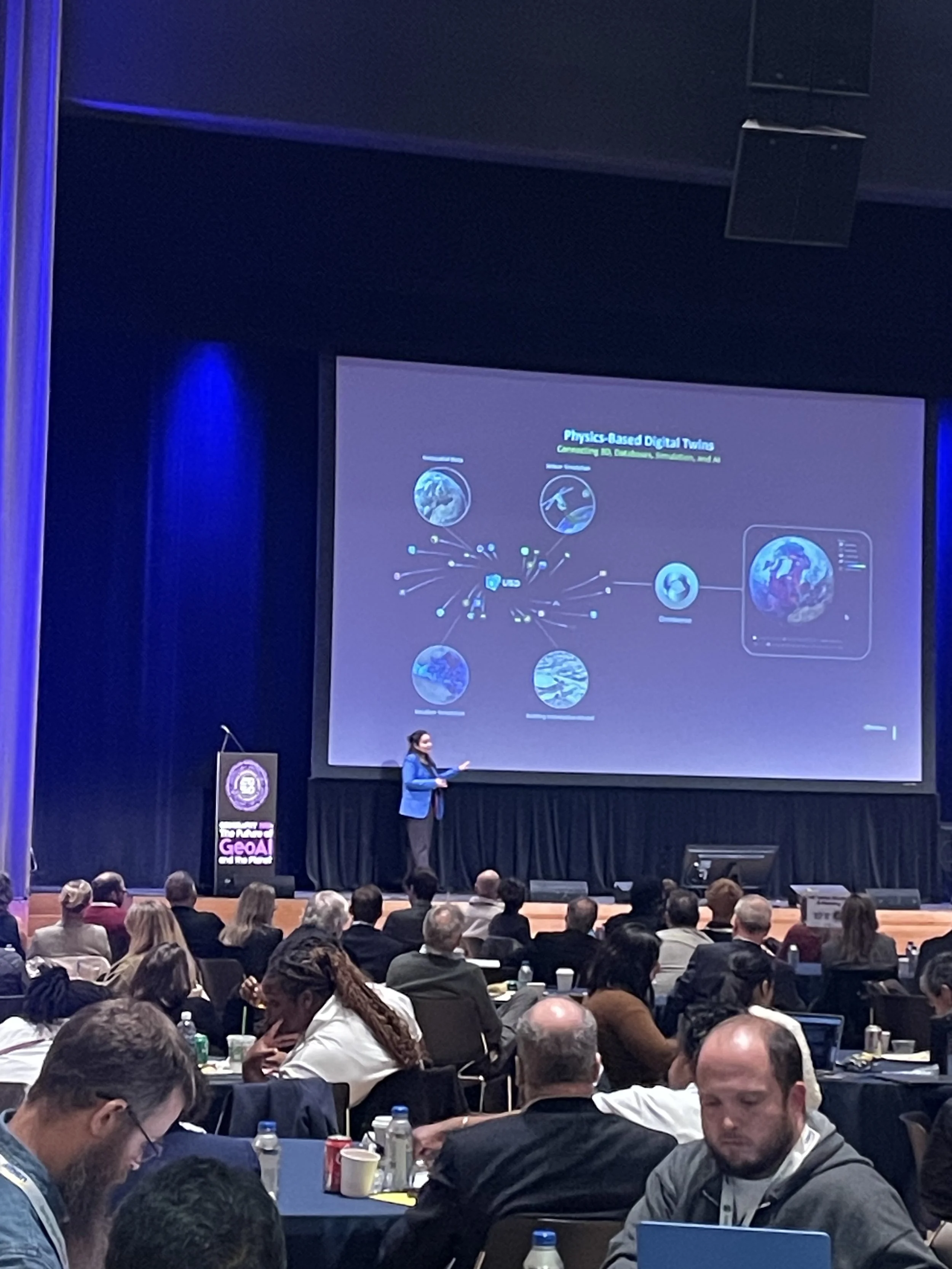
Ahyoung Chang Presented at Geography 2050: The Future of GeoAI and the Planet
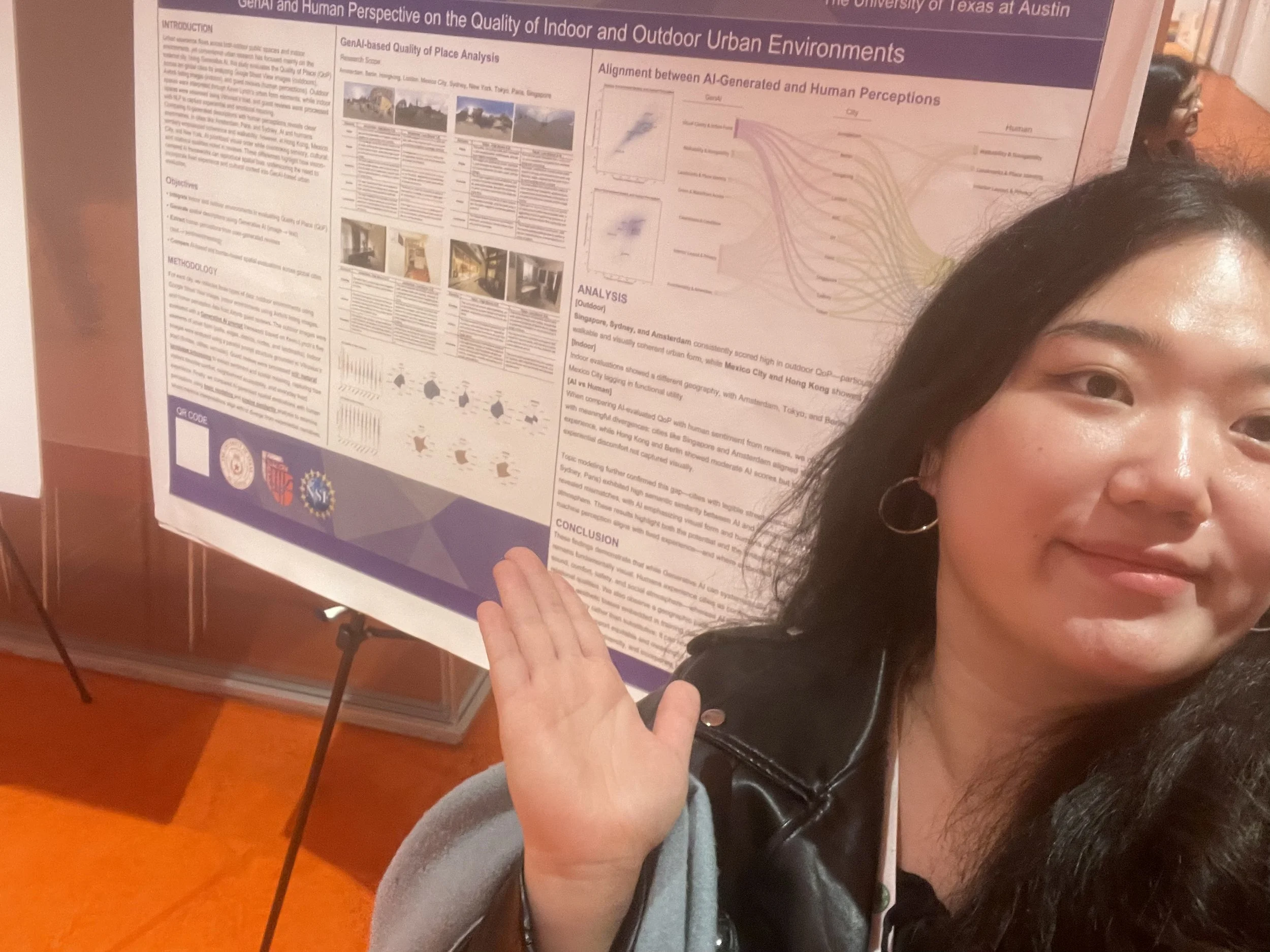
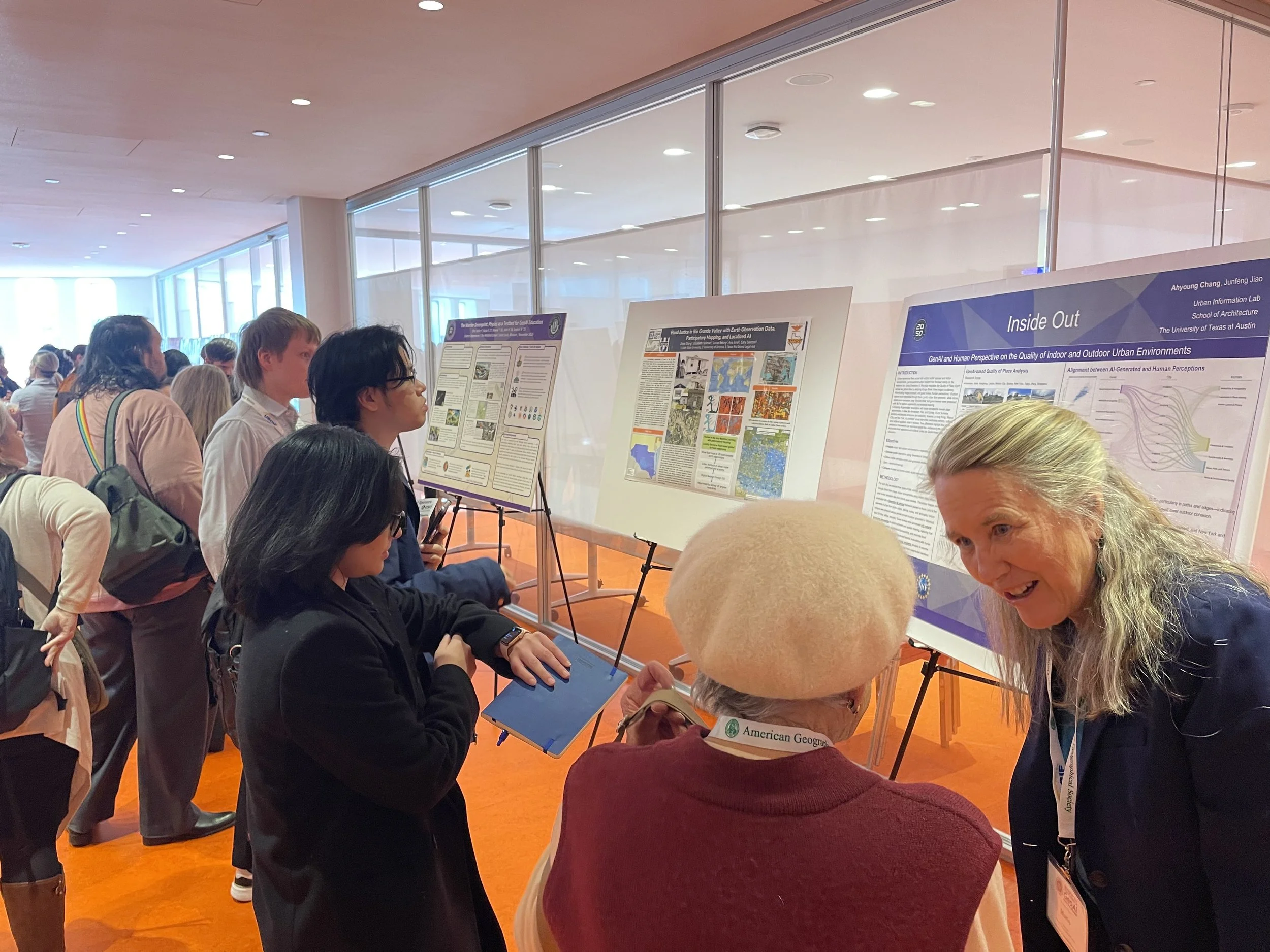
At the in-person poster exhibition, Ahyoung presented her research titled
“Inside Out: GenAI and Human Perspectives on the Quality of Indoor and Outdoor Urban Environments.”
This study explores how generative AI can be used to evaluate the quality of urban environments by integrating both indoor and outdoor perspectives—spaces where people live, interact, and experience the city. The research compares AI-generated spatial descriptions with human perceptions to identify where evaluations of urban quality converge or diverge, highlighting the strengths and limitations of AI-driven place assessment.
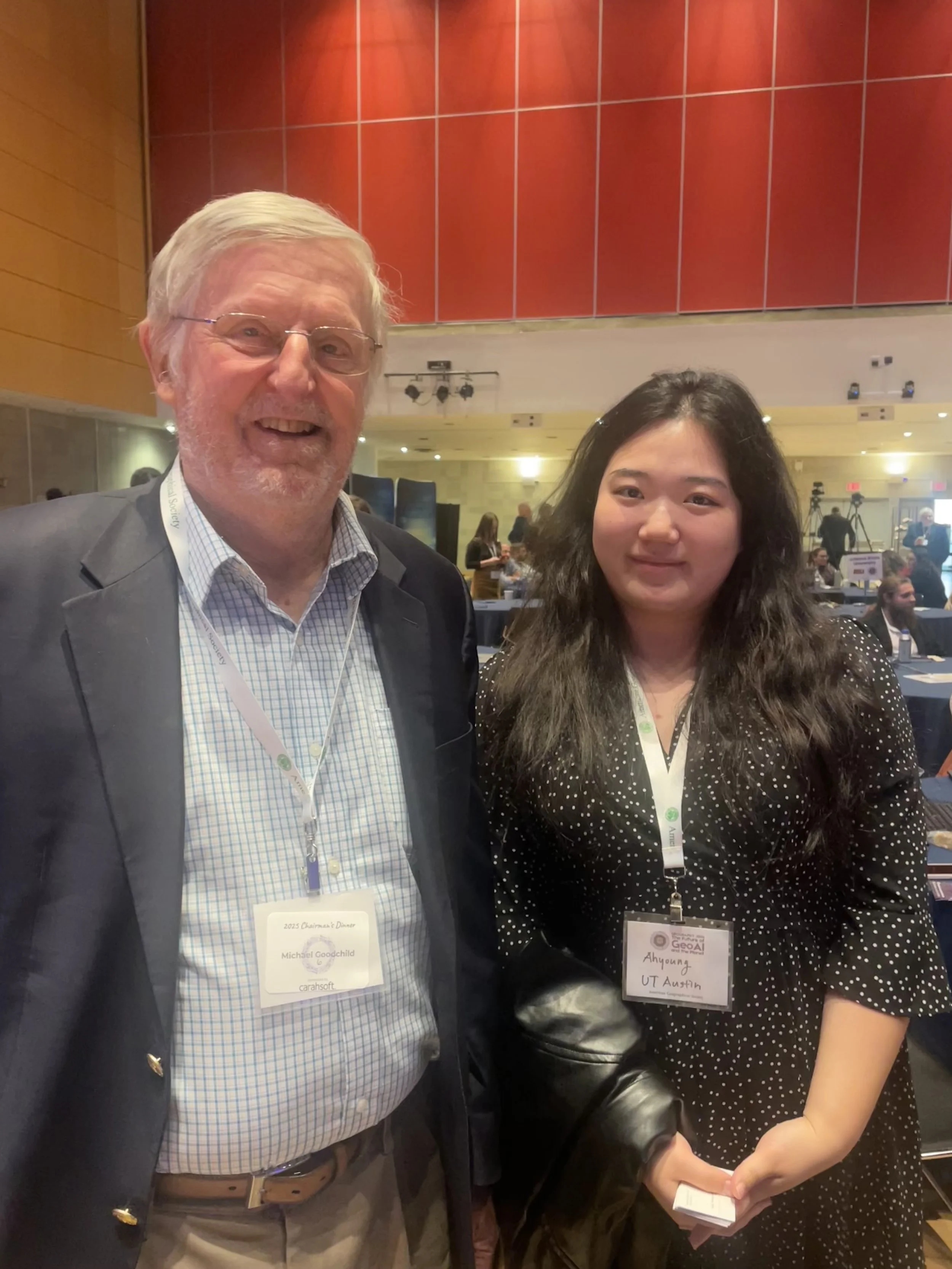
In addition to the poster session, the symposium offered opportunities to engage with leading scholars and practitioners working at the forefront of GeoAI research and application. Through keynote sessions, lightning talks, and informal discussions, the event fostered meaningful exchanges on how geography, artificial intelligence, and urban planning intersect in shaping future cities.
Reflecting on the experience, Ahyoung noted that the symposium reinforced the idea that geography is inseparable from understanding cities, and that collaboration across disciplines is essential for building smarter and more inclusive urban systems.
Urban Information Lab is proud to support its members’ participation in global academic forums and looks forward to continued research at the intersection of GeoAI, urban perception, and spatial quality assessment.
Urban Information Lab member Ahyoung Chang, PhD student in Community and Regional Planning at The University of Texas at Austin, recently attended and presented at the Geography 2050 Fall Symposium, hosted by the American Geographical Society (AGS) in New York.
Geography 2050 is an annual international symposium that brings together scholars and practitioners from academia, the public sector, non-profit organizations, and industry to engage in transdisciplinary discussions on the future of geography and geospatial technologies. This year’s theme, “The Future of GeoAI and the Planet,” focused on the evolving role of GeoAI in addressing complex global and urban challenges.